8 Fascinating Facts About Light-Made 'Housane' Molecules Set to Revolutionize Medicine
Imagine building the world’s smallest, most energy-packed rings—using nothing but light. That’s exactly what a team of chemists has achieved with housane molecules, tiny strained structures that were once nearly impossible to produce efficiently. Their light-driven method could transform how we design new drugs and advanced materials. Here are eight essential facts about this breakthrough and why it matters.
1. What Are Housane Molecules?
Housane molecules are compact, ring-shaped organic compounds with a distinctive three-dimensional shape. Their name comes from their resemblance to a house’s framework—a fused set of small rings. What makes housanes special is the extreme internal strain locked inside their bonds. This strain stores a lot of energy, much like a compressed spring. In chemistry, strained molecules are highly reactive, which makes them invaluable for building complex molecular architectures. However, that same strain also makes them unstable and hard to synthesize. Until now, producing housanes in a controlled way required harsh conditions or yielded only trace amounts.
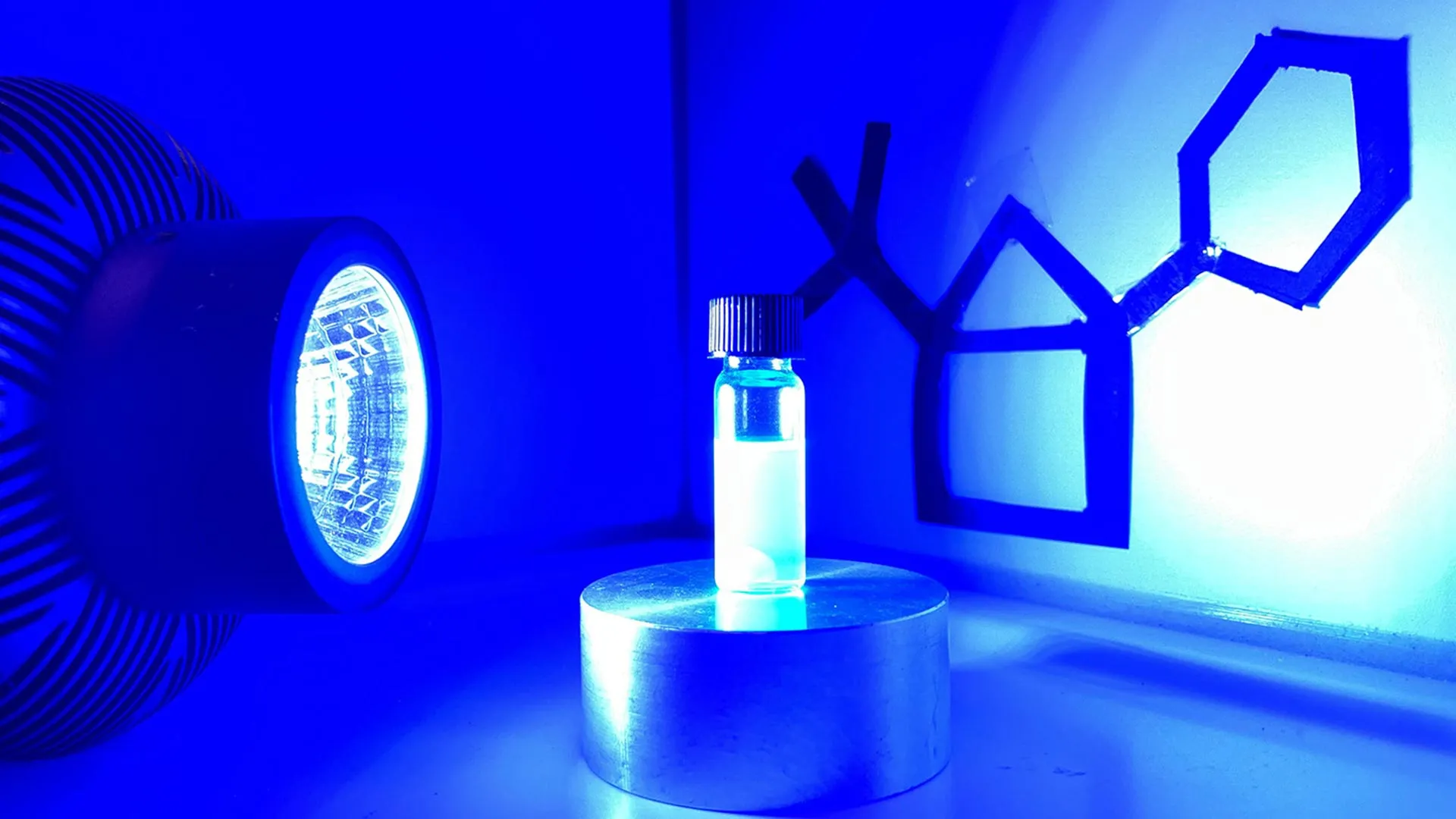
2. The Challenge of Making Strained Molecules
Synthesizing strained molecules is a classic headache in organic chemistry. The very bonds that give housanes their high energy also make them prone to unwanted side reactions. Traditional methods often rely on extreme heat or strong acids, which can break apart the fragile rings before they form. As a result, chemists could only produce tiny, impure batches—far too little for practical use in medicine or materials. The team’s new approach bypasses these problems by using photocatalysis—a light-driven process that gently nudges the starting molecules into the desired strained structure without harsh conditions. This is like threading a needle in slow motion, where light acts as the precise guide.
3. The Light-Driven Breakthrough: Photocatalysis in Action
At the heart of the discovery is a carefully chosen photocatalyst—a molecule that absorbs light and transfers energy to the starting materials. When the catalyst is excited by a specific wavelength of light, it initiates a controlled chemical reaction. The researchers fine-tuned both the catalyst and the starting molecules so that the reaction follows a single, clean pathway, producing housanes with high efficiency and minimal byproducts. This method is both mild and scalable, operating at room temperature with common light sources. It’s a stark contrast to the messy, high-temperature processes of the past. The result: housane molecules can now be made in useful quantities, opening doors to applications that were previously out of reach.
4. Why Strain Is a Feature, Not a Bug
You might think strain is always a problem, but in drug design, it can be a powerful tool. Strained molecules like housanes have high potential energy, which means they can readily react with biological targets such as enzymes or receptors. This makes them excellent candidates for click chemistry or bioorthogonal reactions—reactions that proceed rapidly and selectively inside living systems. Moreover, the strain can be released in a controlled way to trigger a biological effect, like unlocking a drug’s active form exactly where it’s needed. Think of housanes as tiny molecular springs that can be released on demand. This property is already being explored for prodrugs that activate only in diseased tissue.
5. Applications in Drug Development
The most immediate impact of light-made housanes is in pharmaceutical research. Many modern drugs work by binding tightly to proteins, and the three-dimensional shape of housanes can fit into nooks and crannies that flat molecules cannot. Their high strain also allows for neomorphic inhibitors—compounds that create new binding pockets in proteins. Additionally, housanes serve as versatile building blocks for synthesizing complex natural product analogs. With the new light-based method, medicinal chemists can explore a wider chemical space, potentially discovering treatments for diseases like cancer, infections, and neurological disorders. The ability to produce these molecules in gram-scale quantities (instead of micrograms) will accelerate preclinical testing.
6. Beyond Medicine: Materials Science Horizons
Housane molecules aren’t limited to the pharmacy. Their high energy and unique geometry make them attractive for materials science. For instance, they can be used to create new types of polymers with unusual mechanical properties—such as self-healing materials or shape-memory plastics. The stored strain can be triggered by heat or light to change the material’s structure. Housanes could also serve as molecular motors or actuators, converting chemical energy into motion at the nanoscale. In electronics, their rigid frameworks might improve the performance of organic semiconductors. While still early research, the light-driven synthesis removes a major bottleneck, allowing materials scientists to test housane-based components in real devices.
7. The Role of Photocatalysis: How Light Runs the Reaction
Photocatalysis is like a master key that unlocks chemical transformations with precision. In this case, the photocatalyst absorbs visible or ultraviolet light and enters an excited state. It then transfers energy (via single electron transfer or energy transfer) to the precursor molecules, creating a reactive intermediate that can form the stressed ring. The key was to tune the catalyst’s energy level so that it activates only the desired bond, avoiding side reactions. The team also optimized the reaction conditions—solvent, concentration, light intensity—to maximize yield. This level of control is remarkable because it turns a chaotic process into a predictable, one-step synthesis. For future applications, similar photocatalysts could be adapted to create other strained molecules like cyclopropanes or cubanes.
8. What’s Next for Housane Research?
The immediate next steps involve scaling up the reaction and testing housanes in biological models. Researchers are also exploring different types of housane variants—such as heteroatom-substituted ones that might have even more interesting properties. Another frontier is enantioselective synthesis: making housanes with specific handedness (chirality), which is crucial for drug activity. The photocatalyst itself could be improved to work with a broader range of starting materials or under milder conditions (e.g., using sunlight). Ultimately, this light-driven approach could become a standard tool in the chemist’s toolbox, not just for housanes but for other high-energy molecules. The dream is to create a library of strained building blocks that can be assembled on demand—like Lego bricks for the molecular world.
From a chemist’s hobby to a practical synthetic method, the journey of housane molecules shows how innovation in basic science can open unexpected doors. By harnessing light, we’re now able to produce these tiny, strained rings efficiently—and that could lead to smarter drugs, stronger materials, and a deeper understanding of molecular design. The next time you flip a switch, think of the molecules being assembled in the dark: the future of medicine is being built one photon at a time.