Titan: Humanity's Next Giant Leap Beyond the Moon and Mars?
Introduction: Setting Sights on Saturn's Largest Moon
As space agencies and private companies race to establish a permanent presence on the Moon and prepare for crewed missions to Mars, a bold new conversation is emerging: should Saturn's enigmatic moon, Titan, be the next frontier for human exploration? Next month, an unprecedented workshop will convene leading scientists and engineers to outline a feasible roadmap for a crewed expedition to Titan—the only moon in our solar system with a thick atmosphere and stable liquid on its surface. This article explores why Titan is captivating the imagination of planetary scientists, what such a mission would entail, and the monumental challenges and rewards that lie ahead.
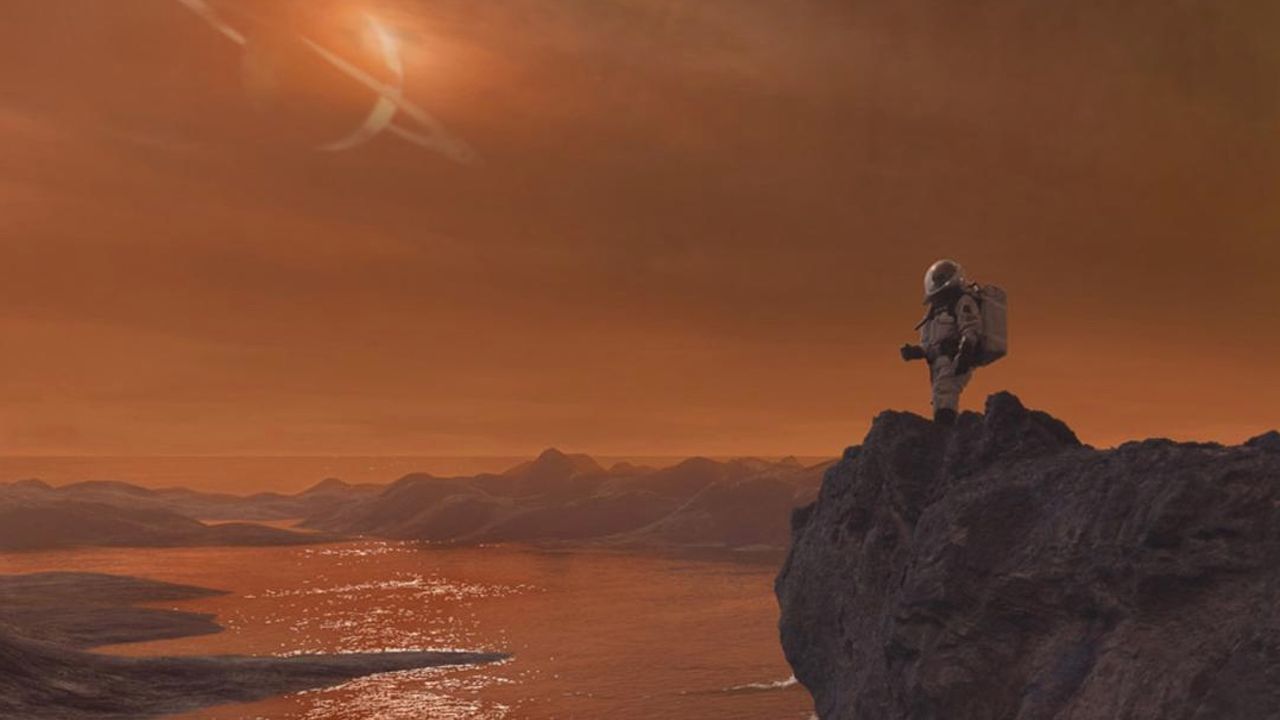
Why Titan? A World of Extremes and Potential
Titan, larger than the planet Mercury, is a world of stark contrasts and tantalizing possibilities. Its dense nitrogen-rich atmosphere—similar to Earth's in composition but far thicker—protects the surface from cosmic radiation and solar wind. This natural shield could be a critical advantage for long-duration human habitation. Moreover, Titan's surface is sculpted by rivers and lakes of liquid methane and ethane, forming a hydrological cycle analogous to Earth's water cycle but with hydrocarbons. These features make Titan a unique laboratory for studying prebiotic chemistry and the conditions that might have preceded life on our own planet.
Scientific Significance
Beneath its icy crust, Titan likely harbors a subsurface ocean of liquid water, mixing with ammonia—a combination that could potentially support microbial life. The Cassini-Huygens mission revealed complex organic molecules, including tholins, in the atmosphere and on the surface. Exploring Titan up close could provide unprecedented insights into the origins of life, planetary evolution, and climate dynamics on an alien world. For astrobiologists, Titan represents one of the most promising targets in the solar system to search for signs of life beyond Earth.
The Daunting Challenges of a Titan Mission
While Titan's attractions are compelling, sending humans there is an enormously difficult undertaking. The distance from Earth to Saturn averages about 1.4 billion kilometers—roughly ten times the distance to Mars. A one-way trip using current propulsion technology would take approximately seven years. Such a long journey exposes crews to prolonged microgravity, cosmic radiation, and psychological isolation. Additionally, Titan's surface temperature hovers around -179°C (-290°F), requiring habitats and spacesuits with extraordinary insulation and heating systems.
Communication and Autonomy
The vast distance also creates a signal delay of about 70 to 90 minutes, making real-time communication with Earth impossible. Any crewed mission would need highly autonomous systems and advanced AI to handle emergencies and maintain life support without ground control assistance. Powering habitats and equipment in the dim sunlight (about 1% of Earth's intensity) would likely rely on nuclear fission reactors—a technology still under development for deep-space applications.
Blueprints for a Crewed Trek: The Upcoming Workshop
Next month's historic gathering will bring together scientists, engineers, and mission planners to create a comprehensive blueprint for a crewed Titan expedition. Discussions will focus on propulsion technologies (such as nuclear thermal or electric), in-situ resource utilization to produce fuel and oxygen from Titan's atmosphere and lakes, and the design of habitats that can withstand the extreme cold and high atmospheric pressure (1.5 times Earth's). The workshop will also address ethical considerations, international cooperation, and the incremental steps—such as robotic precursor missions—needed to reduce risks before humans set foot on Titan.
Architectural Concepts
Some proposed architectures involve sending a crew in a large, rotating spacecraft to provide artificial gravity during the journey. Upon arrival, astronauts would descend through Titan's thick haze in a winged lander capable of aerodynamic flight—taking advantage of the low gravity (one-seventh of Earth's) and dense atmosphere to explore vast areas. Stay times could be months or even years, using Titan's methane lakes as a resource for fuel and life support. The moon's slow rotation rate (a day is 16 Earth days) offers long periods of twilight, which could be used for surface operations.
Titan Compared to the Moon and Mars
While the Moon and Mars offer closer and more immediate destinations, Titan presents unique advantages that could outweigh its daunting distance. Unlike the Moon's harsh vacuum and extreme temperature swings, Titan's thick atmosphere eliminates the need for pressure suits—though extreme cold still demands thermal protection. Unlike Mars, where dust storms and thin atmosphere pose risks, Titan's stable weather, abundant resources (water ice, methane, ammonia), and radiation shield make it arguably more hospitable for long-term settlement.
A Stepping-Stone Approach
Proponents argue that establishing a presence on the Moon and Mars first will develop the necessary technologies and experience for a Titan mission. Nuclear propulsion, closed-loop life support, and deep-space habitation techniques tested in cislunar and Martian environments can be adapted for the Saturnian system. Titan could become a hub for scientific exploration of the outer solar system, including missions to Enceladus and other icy moons.
The Future of Human Space Exploration
The idea of sending humans to Titan may seem like science fiction today, but serious planning is underway. The upcoming workshop signals a shift in thinking—from treating Titan as a distant dream to a concrete, achievable goal within this century. The journey will require unprecedented international collaboration, sustained investment, and technological breakthroughs. Yet, the rewards—scientific discovery, the expansion of human presence into the outer solar system, and the profound lessons about life's potential in the cosmos—are incalculable.
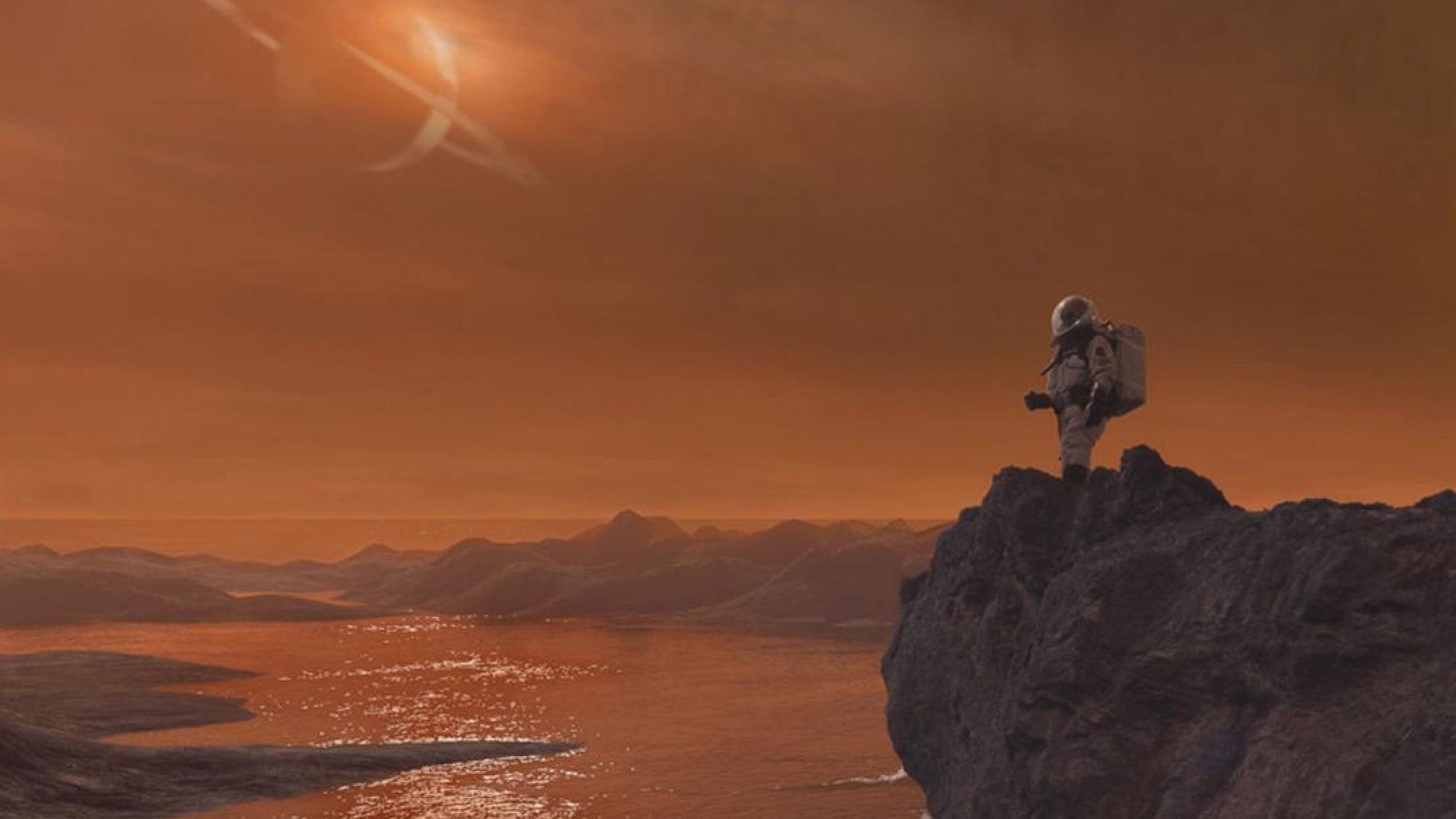
As we prepare for the first footprints on Mars, it is not too early to imagine a future where astronauts gaze upon Saturn's rings from the shores of a methane sea. Humanity's next destination after the Moon and Mars might not be a planet at all—it could be Saturn's huge moon, Titan.